
This shift isn’t just about technology for technology’s sake. It’s about addressing real challenges that organisations face: reducing training costs, improving engagement, ensuring compliance, and ultimately creating a more skilled and knowledgeable workforce. As we explore the current state and future potential of AI in eLearning, it becomes clear that we’re witnessing the beginning of a fundamental transformation in how we think about learning and development.
The Current State of Workplace Training
Before diving into AI solutions, it’s crucial to understand the challenges that traditional training methods present. Many organisations struggle with several key issues that AI-powered systems are uniquely positioned to address.
Time and Resource Constraints
Creating high-quality training content traditionally requires significant time investment from subject matter experts, instructional designers, and technical teams. A single course can take weeks or months to develop, during which business needs may have already evolved. This lengthy development cycle often means training materials are outdated before they’re even deployed.
Lack of Personalisation
Most traditional training programs follow a one-size-fits-all approach, failing to account for different learning styles, existing knowledge levels, or role-specific requirements. This results in experienced employees sitting through basic material they already know, while newcomers may struggle with advanced concepts without proper foundation.
Limited Engagement and Retention
Static content formats struggle to maintain learner engagement, leading to poor completion rates and knowledge retention. Without interactive elements, real-time feedback, or adaptive difficulty levels, learners often find training sessions monotonous and ineffective.
How AI is Transforming eLearning
Artificial intelligence addresses these challenges through several innovative approaches that are already being implemented by forward-thinking organisations. Let’s explore the key ways AI is revolutionising workplace training.
Automated Content Creation
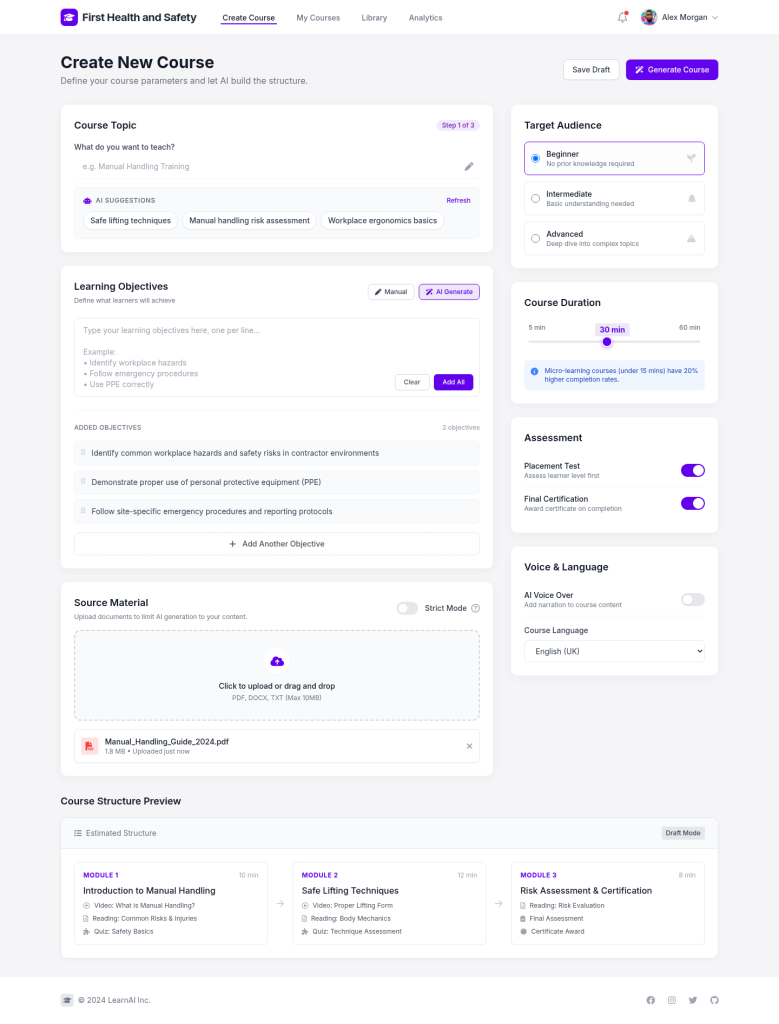
Perhaps the most transformative application of AI in eLearning is automated content creation. Modern AI systems can analyse existing documents, presentations, and materials to generate comprehensive training courses in minutes rather than weeks. This technology doesn’t just convert text to slides; it understands context, identifies key learning objectives, and creates interactive elements that enhance comprehension.
Advanced AI platforms can even generate professional voiceovers in multiple languages, create assessment questions based on content, and suggest multimedia elements that support different learning styles. This automation doesn’t replace human expertise but rather amplifies it, allowing subject matter experts to focus on strategy and refinement rather than manual content creation.
Personalised Learning Pathways
AI excels at creating personalised experiences by analysing individual learner data, including past performance, learning preferences, job role requirements, and career goals. This analysis enables the creation of customised learning pathways that adapt in real-time based on learner progress and engagement.
For example, if a learner demonstrates strong understanding of basic concepts, the AI can automatically advance them to more complex material. Conversely, if someone struggles with particular topics, the system can provide additional resources, alternative explanations, or prerequisite content to ensure solid foundation building.
Intelligent Assessment and Feedback
Traditional assessments often fail to provide meaningful insights into learner understanding. AI-powered assessment tools can analyse not just whether answers are correct, but how learners arrived at their conclusions, identify knowledge gaps, and provide targeted feedback for improvement.
Real-World Impact and Case Studies
The theoretical benefits of AI-powered eLearning are compelling, but the real proof lies in practical implementation. Organisations across various industries are already seeing significant returns on their AI training investments.
Manufacturing Sector Success
A leading manufacturing company implemented AI-powered safety training and saw a 60% reduction in workplace incidents within six months. The AI system created role-specific training modules based on each employee’s work environment and risk factors, ensuring relevant and engaging content that translated directly to improved safety practices.
Healthcare Training Revolution
Healthcare organisations have particularly benefited from AI’s ability to keep training content current with rapidly evolving regulations and best practices. One hospital network reduced compliance training time by 50% while improving test scores by 25% through AI-generated, adaptive learning modules.
Cost Savings Across Industries
Beyond improved outcomes, organisations report significant cost savings. The automation of content creation and personalisation of learning paths has reduced training development costs by up to 70% in some cases, while simultaneously improving training effectiveness and employee satisfaction.
Looking Ahead: The Future of AI in eLearning
As impressive as current AI capabilities are, we’re still in the early stages of this technological revolution. Several emerging trends suggest even more transformative changes ahead.
Virtual Reality Integration
The combination of AI with virtual and augmented reality technologies promises to create immersive training experiences that were previously impossible. Imagine safety training that places employees in virtual hazardous situations, allowing them to practice emergency procedures without real-world risks.
Predictive Learning Analytics
Future AI systems will not only respond to current learning needs but predict future requirements based on industry trends, career progression patterns, and organisational goals. This proactive approach to training will ensure employees are always prepared for upcoming challenges and opportunities.
Continuous Learning Ecosystems
Rather than discrete training events, AI will enable continuous learning ecosystems that integrate seamlessly with daily work activities. These systems will identify learning opportunities in real-time and provide just-in-time training precisely when and where it’s needed most.
Embracing the AI-Powered Future
The transformation of eLearning through artificial intelligence represents more than just technological advancement; it’s a fundamental shift toward more effective, efficient, and engaging learning experiences. Organisations that embrace these technologies today will find themselves better positioned to attract talent, improve performance, and adapt to future challenges.
However, successful implementation requires more than just adopting new technology. It demands a strategic approach that considers organisational culture, learning objectives, and change management. The most successful AI eLearning implementations are those that view technology as an enabler of human potential rather than a replacement for human insight.
As we look to the future, one thing is clear: AI-powered eLearning is not just coming—it’s already here. The question isn’t whether to embrace this technology, but how quickly and effectively organisations can integrate it into their learning and development strategies.