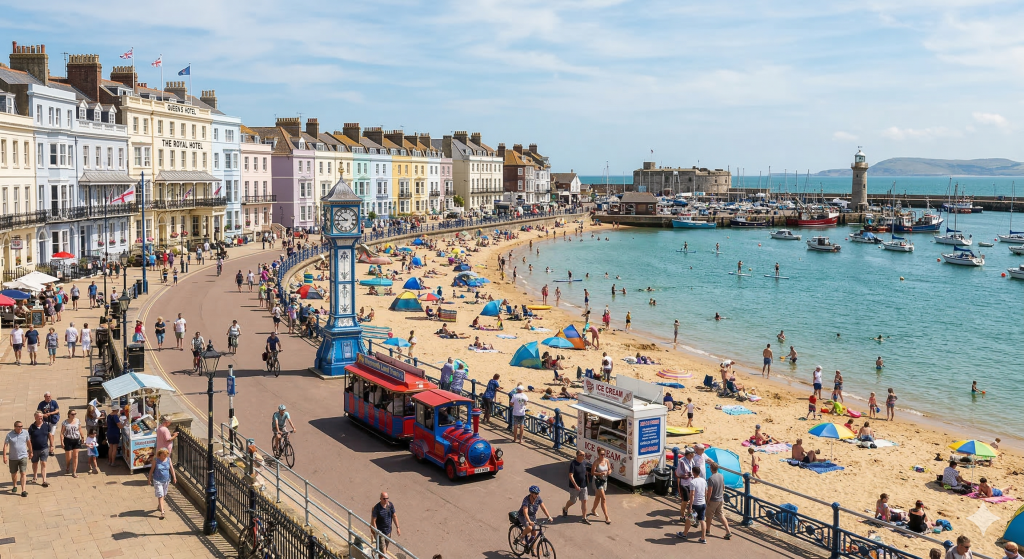

An enormous sandcastle constructed in Weymouth to celebrate the countdown to the 2012 Olympic Games was demolished just hours after it was completed due to health and safety concerns. The structure, built to mark 100 days until the start of the London 2012 Olympics, attracted attention from both the public and media before being removed shortly after the official photographs were taken.
The decision sparked debate about whether health and safety regulations had gone too far, but officials explained that the move was necessary to prevent potential accidents on the busy public beach.
The Olympic Sandcastle in Weymouth
The giant sandcastle was built on Weymouth beach in Dorset, one of the key venues for the sailing events during the 2012 Olympic Games. The structure stood around fifteen feet tall and included two turrets along with the Olympic rings carved into the sand.
Professional sand artist Mark Anderson and a team of helpers spent four days constructing the castle. The project cost around £5,000 and was commissioned primarily to create a striking image that could be used to promote the Olympic sailing events taking place in Weymouth and Portland.
The impressive sculpture quickly drew attention from visitors and photographers, generating significant publicity for the area.
Why the Sandcastle Was Demolished
Despite the effort that went into building the sandcastle, local authorities decided it could not remain on the beach for public viewing. Officials feared that the tall structure could collapse or that members of the public might attempt to climb on it, potentially leading to injuries.
Because the beach is a public space, managing the risks associated with the large structure would have required fencing and security to prevent people from getting too close. Authorities concluded that dismantling the sandcastle after the photographs were taken was the safest option.
A spokesperson for the local council explained that the castle was never intended to remain as a long-term attraction and was simply designed to provide an iconic image promoting the Olympic events.
Local Reaction
Many local residents were surprised that the sandcastle was demolished so quickly. Some felt it was a shame that such an impressive piece of work had such a short lifespan, particularly given the cost and the effort that went into its construction.
However, others acknowledged that health and safety considerations are important when large structures are placed in public areas where thousands of visitors may pass through each day.
With the Olympic Games expected to bring significant crowds to Weymouth, authorities were keen to minimise any potential safety risks.
Health and Safety Considerations in Public Spaces
The demolition of the sandcastle highlighted an important issue: balancing public safety with public attractions. Large installations in open public areas can create potential hazards if they are unstable or accessible to large crowds.
Health and safety risk assessments often consider factors such as:
- structural stability
- potential for members of the public to climb or interfere with installations
- the likelihood of collapse or injury
- the ability to safely control access to the area
Where risks cannot be adequately controlled, removing the hazard may be the safest option.
The Wider Impact
Although the sandcastle itself only existed for a short period of time, the photographs and media coverage generated significant publicity for Weymouth and the surrounding Dorset coastline.
The publicity helped promote the Olympic sailing venue and showcased the town’s famous beach to audiences around the world. Officials argued that the value of this media coverage far exceeded the cost of creating the sandcastle in the first place.
Health and Safety Lessons
This unusual story demonstrates how health and safety considerations can influence decisions in public environments. While some people saw the demolition as excessive caution, the decision was ultimately based on preventing possible injuries in a busy public space.
Risk assessments and proactive safety measures are an important part of protecting the public, particularly when large crowds are expected.
Frequently Asked Questions
Why was the Weymouth Olympic sandcastle demolished?
The sandcastle was demolished because officials feared it could collapse or that members of the public might climb on it and injure themselves.
How large was the sandcastle?
The structure was around fifteen feet tall and featured turrets and Olympic branding carved into the sand.
Who built the sandcastle?
The sculpture was created by sand artist Mark Anderson with assistance from a team of helpers.
Why was the sandcastle built in the first place?
It was commissioned to mark 100 days until the 2012 Olympic Games and to generate media publicity for Weymouth’s Olympic sailing venue.