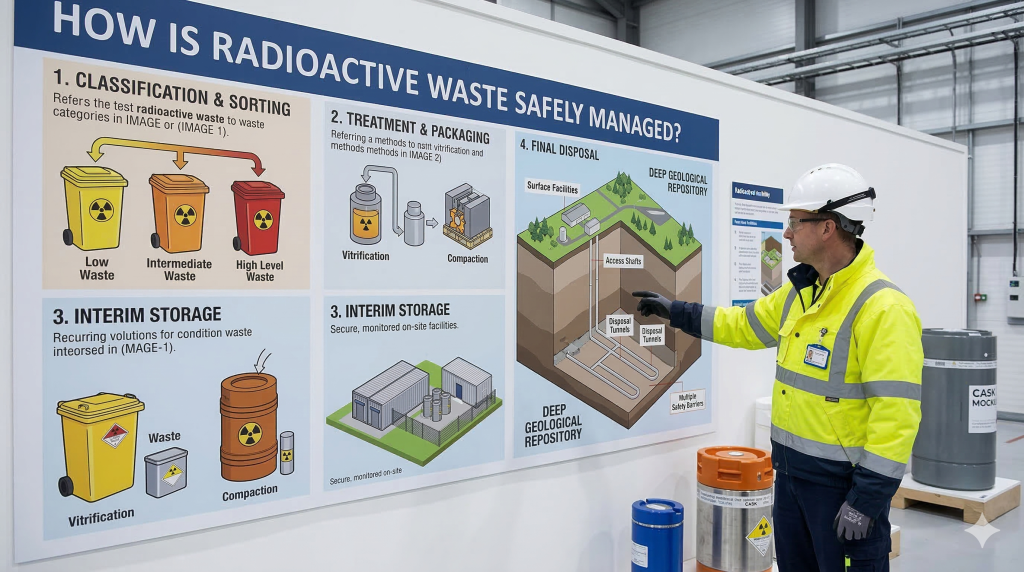

Radioactive waste is produced in a variety of industries, including nuclear energy generation, medical facilities, scientific research and certain manufacturing processes. Because radioactive materials can pose risks to human health and the environment, strict procedures are used to ensure radioactive waste is handled, stored and disposed of safely.
Effective radioactive waste management is essential for protecting workers, the public and the environment. Organisations that work with radioactive materials must follow strict safety procedures and regulations to ensure that radioactive waste is properly controlled from the moment it is generated until it is safely disposed of.
What Is Radioactive Waste?
Radioactive waste refers to materials that contain radioactive substances and are no longer useful for their original purpose. These materials may emit radiation that can be harmful if not managed correctly.
Radioactive waste can come from a range of sources, including:
- nuclear power generation
- hospitals and medical treatments
- scientific research laboratories
- industrial processes using radioactive materials
Although radioactive waste can pose risks, modern waste management systems are designed to control these materials safely.
Types of Radioactive Waste
Radioactive waste is typically categorised according to the level of radioactivity it contains. Different types of waste require different handling and storage methods.
Common categories include:
Low-level waste
This includes items such as protective clothing, tools and materials that have become contaminated with small amounts of radioactive material.
Intermediate-level waste
This waste contains higher levels of radioactivity and may include equipment or materials used in nuclear facilities.
High-level waste
High-level radioactive waste is produced mainly from nuclear fuel used in reactors. It generates significant heat and requires specialised handling and storage.
Each category requires specific management procedures to ensure safe containment.
Safe Handling of Radioactive Waste
Organisations that handle radioactive materials follow strict procedures to minimise risk. Workers receive specialised training and must follow clearly defined safety protocols.
Key safety measures include:
- limiting exposure to radiation
- using protective equipment
- storing materials in secure containers
- monitoring radiation levels
- restricting access to authorised personnel
These measures help ensure that workers remain protected when dealing with radioactive substances.
Storage and Containment
One of the most important aspects of radioactive waste management is secure storage. Radioactive materials are placed in specially designed containers that prevent radiation from escaping and protect the surrounding environment.
Depending on the type of waste, storage may involve:
- shielded containers made from steel or concrete
- secure storage facilities with controlled access
- underground storage systems
- specialised transport containers for safe movement
These storage systems are carefully designed to prevent leaks, contamination or exposure.
Long-Term Disposal of Radioactive Waste
Some radioactive waste remains hazardous for long periods of time. For this reason, long-term disposal strategies are used to isolate waste from the environment.
One common approach is deep geological disposal, where radioactive waste is placed deep underground in stable rock formations. These facilities are designed to contain radioactive materials safely for thousands of years.
Other waste types may be treated, recycled or stored until radiation levels decrease to safe levels.
The Role of Regulation and Safety Standards
The management of radioactive waste is tightly regulated to ensure safety. Governments and regulatory authorities set strict rules for how radioactive materials must be handled, transported and disposed of.
Organisations working with radioactive substances must follow these regulations and regularly review their safety procedures.
Risk assessments, monitoring systems and training programmes are all important parts of maintaining safe operations.
The Importance of Safety Training
Workers involved in handling radioactive materials require specialised safety training. Proper training ensures that employees understand how to recognise hazards, follow safety procedures and respond to potential incidents.
Training helps organisations maintain high safety standards and ensures that radioactive waste is managed responsibly.
Many organisations now deliver safety training through online H&S training and eLearning programmes, allowing employees to access essential safety information quickly and consistently.
Frequently Asked Questions
Why is radioactive waste dangerous?
Radioactive waste can emit radiation that may damage living tissue if exposure is not properly controlled.
How is radioactive waste stored safely?
Radioactive waste is stored in specially designed containers and facilities that prevent radiation from escaping.
What is the safest way to dispose of radioactive waste?
Deep geological disposal is often used for high-level radioactive waste, placing it deep underground in stable rock formations.
Who regulates radioactive waste management?
Radioactive waste management is regulated by national and international authorities that set strict safety standards for handling and disposal.