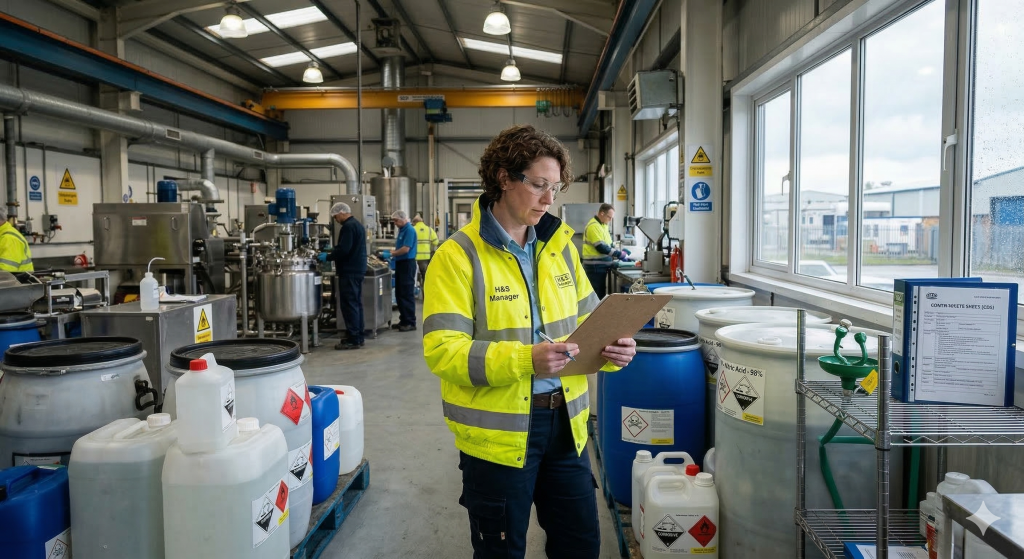

Hazardous substances are used in many workplaces, from manufacturing and construction to cleaning, laboratories and healthcare environments. The Control of Substances Hazardous to Health Regulations (COSHH) require employers to identify hazardous substances, assess the risks and put appropriate control measures in place.
A COSHH risk assessment helps organisations understand how chemicals and other hazardous substances may affect employees, ensuring that exposure is controlled and workers remain protected.
Carrying out an effective COSHH risk assessment does not need to be complicated, but it does require a structured approach and a clear understanding of the substances being used.
What Is a COSHH Risk Assessment?
A COSHH risk assessment identifies hazardous substances present in the workplace and evaluates the risks they may pose to employees and others. The assessment considers how substances are used, who may be exposed and what steps are required to control the risk.
Hazardous substances covered by COSHH may include:
- chemicals and cleaning products
- fumes, vapours and dust
- gases used in industrial processes
- biological agents such as bacteria or viruses
By assessing these hazards, organisations can implement appropriate control measures to protect workers and prevent harm.
Tip 1 – Identify Hazardous Substances
The first step in a COSHH risk assessment is identifying which substances in the workplace may be hazardous.
This may involve reviewing:
- chemical products used in daily operations
- cleaning agents and solvents
- materials that generate dust or fumes
- substances stored on site
Safety Data Sheets (SDS) provided by manufacturers are an important source of information and should always be reviewed when assessing chemical hazards.
Tip 2 – Understand the Risks
Once hazardous substances have been identified, the next step is to evaluate the risks they present. This involves considering how employees might come into contact with the substance and what the potential health effects may be.
Factors to consider include:
- how the substance is used
- how often workers are exposed
- whether exposure occurs through inhalation, skin contact or ingestion
- the number of employees affected
Understanding these risks helps organisations determine the most effective control measures.
Tip 3 – Implement Control Measures
After evaluating the risks, employers must introduce appropriate control measures to reduce or eliminate exposure.
Common COSHH control measures include:
- substituting hazardous substances with safer alternatives
- improving ventilation systems
- providing personal protective equipment (PPE)
- implementing safe handling procedures
- ensuring substances are stored correctly
The aim is to reduce exposure to the lowest level reasonably practicable.
Tip 4 – Provide Training and Information
Employees who work with hazardous substances must understand the risks involved and how to work safely.
Training should explain:
- the hazards associated with specific substances
- how to follow safe working procedures
- the correct use of protective equipment
- emergency procedures in case of spills or exposure
Many organisations now deliver online H&S training and eLearning courses to ensure employees receive consistent COSHH awareness training.
Tip 5 – Review the Assessment Regularly
Workplaces change over time, and new substances may be introduced into the working environment. For this reason, COSHH risk assessments should be reviewed regularly to ensure they remain accurate and effective.
Reviews should be carried out when:
- new chemicals are introduced
- processes change
- incidents occur
- new information becomes available about a substance
Regular reviews help organisations maintain safe working environments and ensure control measures remain effective.
The Importance of COSHH Training
Understanding COSHH responsibilities is essential for both employers and employees. When workers understand how hazardous substances can affect health and how to work safely with them, the risk of incidents is significantly reduced.
Providing clear training and guidance helps organisations create safer workplaces while ensuring employees understand their responsibilities for handling hazardous materials.
Frequently Asked Questions
What does COSHH stand for?
COSHH stands for Control of Substances Hazardous to Health, a set of regulations designed to protect workers from harmful substances.
Who is responsible for carrying out a COSHH risk assessment?
Employers are responsible for assessing risks from hazardous substances and implementing appropriate control measures.
What substances are covered by COSHH?
COSHH applies to chemicals, dust, fumes, vapours, gases and biological agents that may harm health.
How often should a COSHH risk assessment be reviewed?
Assessments should be reviewed regularly and whenever workplace processes or substances change.