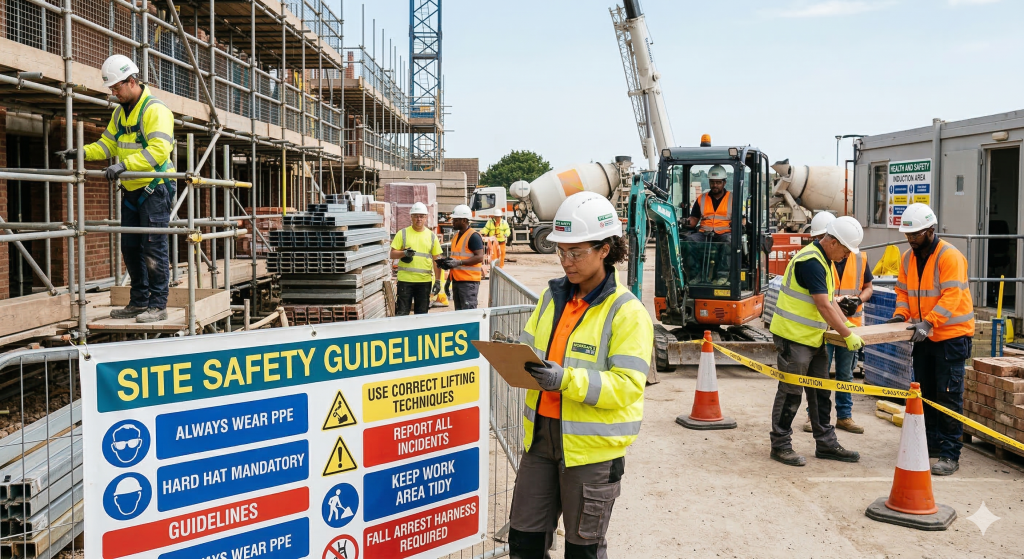

Construction sites are dynamic working environments where hazards can change quickly. Safety guidelines for construction workers help ensure that everyone on site understands the risks involved in construction work and the procedures required to maintain safe working conditions.
Following clear safety guidelines helps protect workers from accidents, injuries and potential health risks. It also helps construction companies maintain consistent safety standards across projects and sites.
Training construction workers to recognise hazards and follow site safety rules is an essential part of maintaining a safe construction environment.
Understanding Construction Site Hazards
Construction sites involve a wide range of activities, equipment and materials that can present safety risks. Workers must remain aware of their surroundings and understand the hazards that may be present.
Common construction site hazards include:
- working at height
- moving vehicles and plant machinery
- manual handling risks
- falling objects
- uneven or unstable surfaces
Understanding these hazards helps workers take the necessary precautions to reduce risks on site.
Personal Protective Equipment (PPE)
Personal protective equipment plays an important role in construction safety. PPE helps protect workers from hazards that cannot be completely eliminated through other safety measures.
Typical PPE used on construction sites may include:
- safety helmets
- high-visibility clothing
- protective footwear
- gloves and eye protection
Workers should always use PPE as required and ensure equipment is in good condition before use.
Safe Working Practices on Site
Construction workers must follow safe working procedures to reduce the risk of accidents. Good site organisation, clear communication and proper planning all contribute to maintaining safe construction environments.
Important safe working practices include:
- following site safety rules and procedures
- reporting hazards or unsafe conditions
- using tools and equipment correctly
- maintaining good housekeeping on site
These practices help ensure construction work can be carried out safely and efficiently.
The Role of Safety Training
Safety training helps construction workers understand their responsibilities and recognise potential hazards. Training also reinforces the importance of following site procedures and using equipment correctly.
Providing regular safety training helps ensure workers remain aware of changing risks and understand how to work safely in different situations.
Training may cover topics such as working at height, manual handling, fire safety and hazard awareness.
Online Construction Safety Training
Many organisations now use online health and safety training and eLearning courses to support construction safety programmes. Online training allows workers to complete training modules before arriving on site or as part of ongoing safety education.
Online learning platforms also make it easier for organisations to track training progress and maintain records.
Benefits of online safety training include:
- flexible learning for workers
- consistent safety training across sites
- easy monitoring of training completion
- digital training records for organisations
These advantages make online training an effective way to deliver construction safety education.
Promoting a Strong Safety Culture
Construction safety guidelines are most effective when supported by a strong safety culture. Workers should feel encouraged to report hazards and raise concerns about safety issues.
When safety becomes a shared responsibility across the workforce, the likelihood of accidents is significantly reduced.
Organisations that invest in safety training and promote responsible working practices create safer construction environments for everyone involved.
Construction Safety Training from First Health and Safety
First Health and Safety provides online health and safety training and eLearning solutions designed to help organisations deliver effective construction safety training.
Our courses help workers understand construction hazards, follow safe working procedures and maintain high safety standards. Online training allows organisations to deliver consistent learning across multiple construction sites while maintaining clear training records.
Providing structured construction safety training helps companies protect workers and strengthen workplace safety management.
Frequently Asked Questions
Why are safety guidelines important for construction workers?
They help workers recognise hazards and follow procedures that reduce the risk of accidents.
What are common construction site hazards?
Typical hazards include working at height, moving machinery, manual handling and falling objects.
Can construction safety training be completed online?
Yes. Many organisations use online eLearning platforms to deliver construction safety training.
Who should follow construction safety guidelines?
All construction workers, supervisors and site managers should follow site safety rules and procedures.