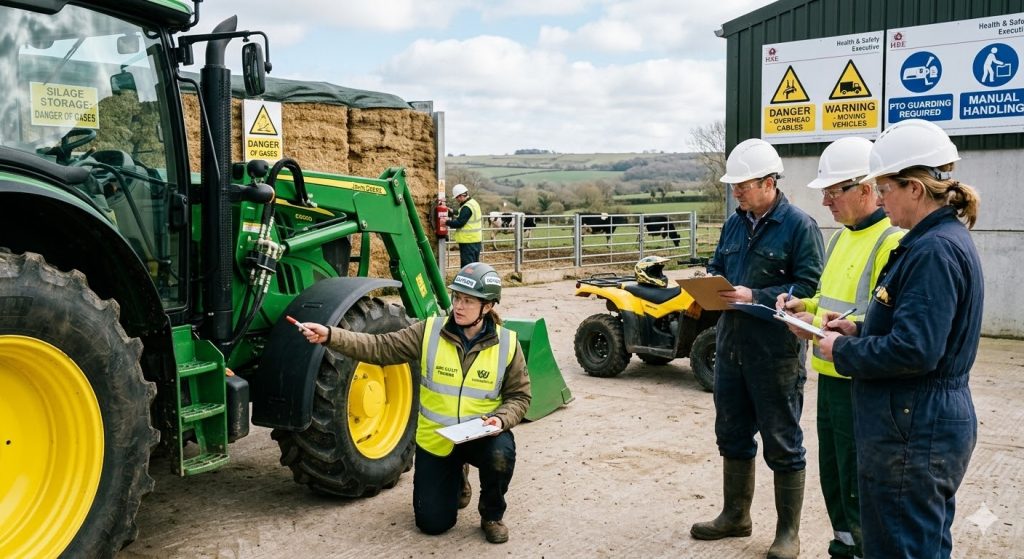

Agriculture remains one of the most hazardous industries in the UK, with farming environments presenting a wide range of risks including heavy machinery, livestock handling, chemicals and unpredictable outdoor conditions. Health and safety in farming is therefore essential for protecting workers, maintaining safe operations and reducing the likelihood of serious accidents.
Farm work often involves a combination of manual labour, vehicle use and interaction with animals, which means workers must be constantly aware of potential hazards. Providing appropriate training and safety guidance helps farmers, employees and contractors understand how to work safely while carrying out essential agricultural tasks.
By focusing on health and safety, farming businesses can protect their workforce while maintaining productive and sustainable agricultural operations.
Why Health and Safety Is Critical in Farming
Farming environments involve a wide variety of activities that can present safety risks. Tractors, machinery, livestock and agricultural chemicals are all common elements of daily farm work, and each carries potential hazards if not handled correctly.
Implementing effective safety procedures helps reduce the risk of accidents and improves awareness among workers. Farms that prioritise health and safety can benefit from:
- improved hazard awareness
- safer use of machinery and equipment
- reduced workplace injuries
- better management of agricultural risks
These measures help create safer working environments for everyone involved in farm operations.
Common Hazards in Agricultural Work
Farm workers may face several hazards during everyday tasks. Understanding these risks is the first step toward preventing accidents.
Common farming hazards include:
- operating tractors and farm machinery
- handling livestock and animals
- working at height in barns or silos
- exposure to agricultural chemicals
- working alone in remote environments
Training helps workers recognise these risks and follow procedures designed to minimise potential dangers.
Machinery Safety on Farms
Agricultural machinery plays a vital role in modern farming but also represents one of the most significant safety risks. Tractors, harvesters and other equipment must be operated carefully and maintained properly.
Workers should receive instruction on:
- safe operation of farm vehicles
- equipment maintenance and inspection
- recognising mechanical faults
- safe working distances around machinery
Proper training and awareness can help prevent many machinery-related accidents.
Livestock Handling and Animal Safety
Working with animals is another important aspect of farm safety. Livestock can behave unpredictably, particularly when stressed or unfamiliar with their surroundings.
Farm workers should understand safe handling techniques and ensure that animal enclosures, gates and barriers are maintained correctly. Awareness of animal behaviour can significantly reduce the risk of injury.
Training helps workers understand how to approach animals safely and how to manage situations where livestock become difficult to control.
The Role of Safety Training in Agriculture
Safety training helps agricultural workers understand potential hazards and follow safe procedures. Training also reinforces the importance of risk assessments and regular equipment checks.
Many farming businesses now include structured training programmes as part of their health and safety management systems. This ensures workers remain aware of best practices and understand how to respond to hazards.
Training can cover topics such as machinery safety, manual handling, chemical awareness and general workplace safety.
Online Health and Safety Training for Agricultural Workers
Many organisations now use online health and safety training and eLearning courses to support safety awareness in farming and agricultural environments. Online learning provides a flexible way for workers to access training while managing busy farming schedules.
Benefits of online training include:
- flexible learning for workers
- consistent safety information
- easy tracking of training progress
- digital training records for organisations
Online training helps farming businesses provide accessible safety education while maintaining clear records of completed courses.
Promoting Safer Farming Environments
Creating a safe farming environment requires ongoing attention to risk management, training and communication. Workers who understand hazards and follow safety procedures are far less likely to be involved in accidents.
Encouraging a culture of safety on farms helps ensure that risks are identified early and managed responsibly.
By investing in health and safety training and awareness, agricultural businesses can protect workers while maintaining efficient and sustainable farming operations.
Frequently Asked Questions
Why is farming considered a high-risk industry?
Farming involves machinery, livestock and outdoor work, all of which present potential hazards.
What are common farming safety risks?
Typical risks include machinery accidents, animal handling injuries and chemical exposure.
Can agricultural safety training be delivered online?
Yes. Many organisations use online training platforms to deliver farming safety awareness courses.
Who should complete farm safety training?
Farm owners, employees and contractors working in agricultural environments can benefit from safety training.