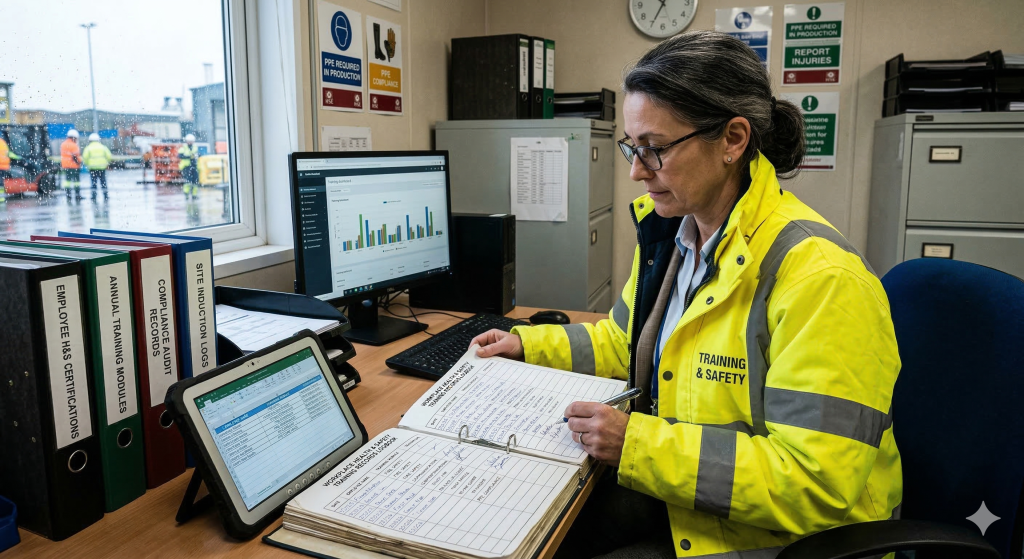

Keeping accurate workplace health and safety training records is an important part of managing safety in any organisation. Training records provide clear evidence that employees have received the information and instruction they need to work safely and understand workplace risks.
For employers, maintaining up-to-date training records also helps demonstrate compliance with health and safety responsibilities. Proper documentation allows organisations to track training completion, monitor employee competence and ensure that safety procedures are consistently followed.
Without clear records, it can be difficult to confirm whether employees have received appropriate training or whether refresher training may be required.
Why Training Records Are Important
Health and safety training records help organisations maintain accountability and demonstrate that employees have been properly trained.
These records are useful for several reasons. They provide evidence that training has taken place, help track employee progress and ensure that safety training remains up to date.
Maintaining accurate records can help organisations:
- demonstrate compliance with workplace safety responsibilities
- track which employees have completed training
- identify when refresher training is required
- support safety audits and inspections
- maintain consistency in workplace training
These benefits make training records a key component of effective health and safety management.
What Should Be Included in Training Records
A well-structured training record should capture essential information about the training provided and the employees who completed it.
Typical training records may include:
- employee name and job role
- training course title
- date of training completion
- trainer or training provider
- certificate or completion status
- renewal or refresher dates
Recording this information ensures organisations can easily monitor training compliance and identify when additional training may be required.
The Role of Training Records in Safety Management
Training records support wider health and safety management systems by helping organisations ensure employees remain competent in their roles.
When incidents occur, training records can also provide valuable information about whether employees have received appropriate safety instruction.
This documentation helps organisations review training effectiveness and identify areas where additional guidance may be needed.
Digital Training Records and eLearning
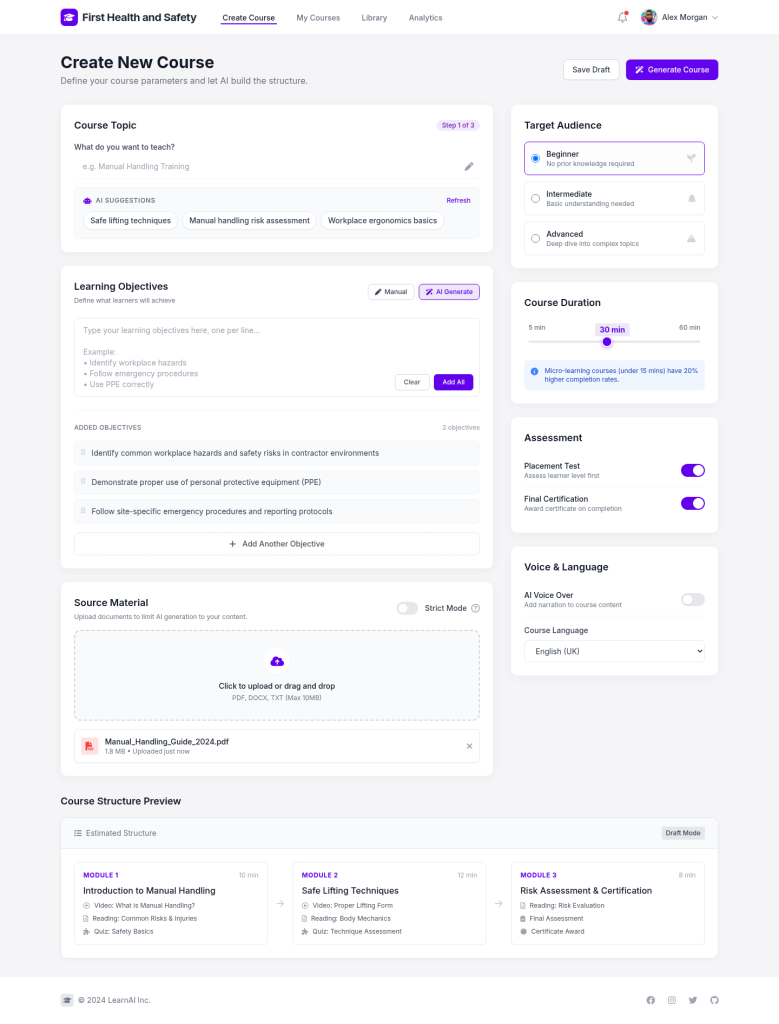
Many organisations now use online H&S training and eLearning platforms to manage training records automatically.
Digital systems allow organisations to track employee progress, store certificates and monitor training completion across multiple teams or locations. This approach reduces administrative work and makes it easier to maintain accurate records.
Online systems also make it easier to provide refresher training and ensure employees remain up to date with safety procedures.
Benefits of digital training records include:
- centralised training documentation
- automated tracking of training completion
- easy access to certificates and records
- improved visibility of training across the organisation
These systems help organisations maintain clear oversight of employee training while simplifying compliance management.
Building a Strong Safety Culture
Maintaining accurate training records is not just about compliance. It also supports the development of a strong safety culture where employees understand the importance of workplace safety and continuous learning.
When organisations provide clear training and maintain reliable records, employees are more confident in their responsibilities and better prepared to recognise potential hazards.
Regular training and clear documentation help organisations maintain safer working environments and reduce the risk of workplace incidents.
Frequently Asked Questions
Why are health and safety training records important?
Training records provide evidence that employees have received appropriate safety training and help organisations track compliance.
How long should training records be kept?
Organisations typically keep training records for several years to demonstrate compliance and support audits or inspections.
Can training records be stored digitally?
Yes. Many organisations now use online training systems to manage training records and track course completion.
What happens if training records are missing?
Missing records can make it difficult to demonstrate that employees have received appropriate training, which may create compliance risks.